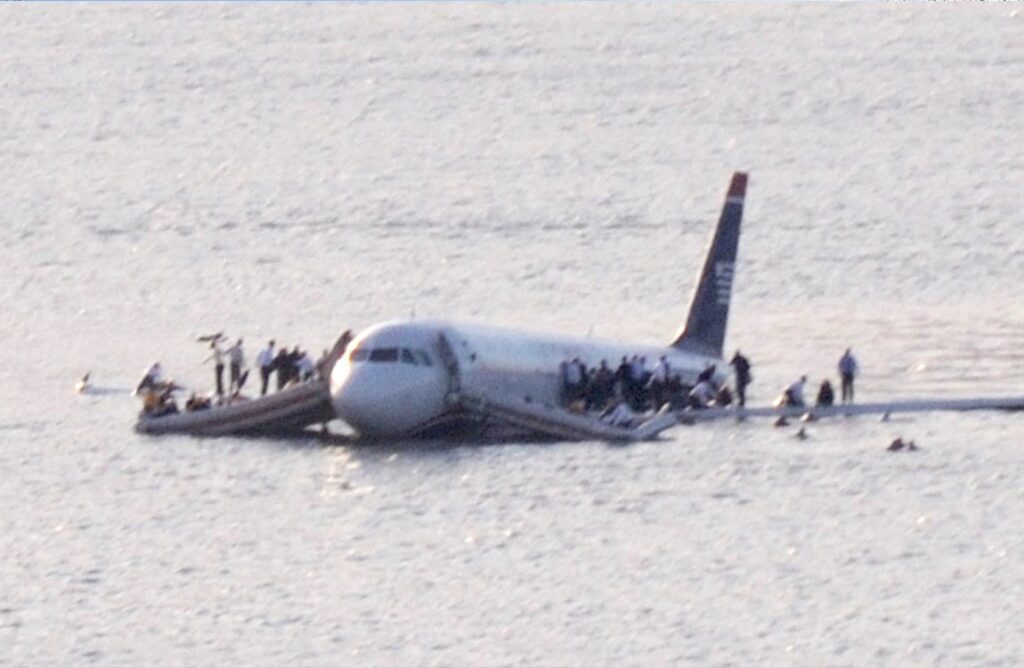
PEACHTREE CITY, USA – January 15th marks 17 years since the “Miracle on the Hudson” water landing of US Airways Flight 1549 by Captain C.B. ‘Sully’ Sullenberger, saving the lives of 155 souls on board.
57-year-old Captain Sully, an airline pilot since 1980, had previously served in the U.S. Air Force. First Officer Jeffrey Skiles had over 15,000 career flight hours, though this was his first assignment flying an A320.
The Airbus A320 was scheduled to fly from New York City’s LaGuardia Airport to Seattle—Tacoma International Airport. The plane hit a flock of geese almost three minutes after take off.
Realizing both engines shut down, Sully took control of the aircraft while Skiles worked to restart the engines. Sully sent a mayday call, while air traffic controllers attempted to direct the aircraft back to LaGuardia. After realizing he would not be able to land at LaGuardia or a surrounding airport, Sully prepared to make a controlled emergency landing on the Hudson River. The “ditching” was successful with no fatalities.
Captain Sullenberger, First Officer Skiles, and the cabin crew received widespread recognition for their actions. They were awarded the National Transportation Safety Board’s Chairman’s Award for Heroism and honored by the City of New York and aviation organizations worldwide. While often described as a miracle, Sullenberger emphasized that the outcome was driven by training, experience, and teamwork.
Flight 1549 serves as a reminder of the critical role reliable aircraft parts play in aviation safety. Alongside pilot training and crew coordination, properly maintained and certified components are essential to ensuring aircraft perform as designed in both routine operations and emergencies.
The industry’s commitment to quality parts, rigorous maintenance standards, and supply chain integrity is a foundation of keeping aircraft safe and passengers protected.