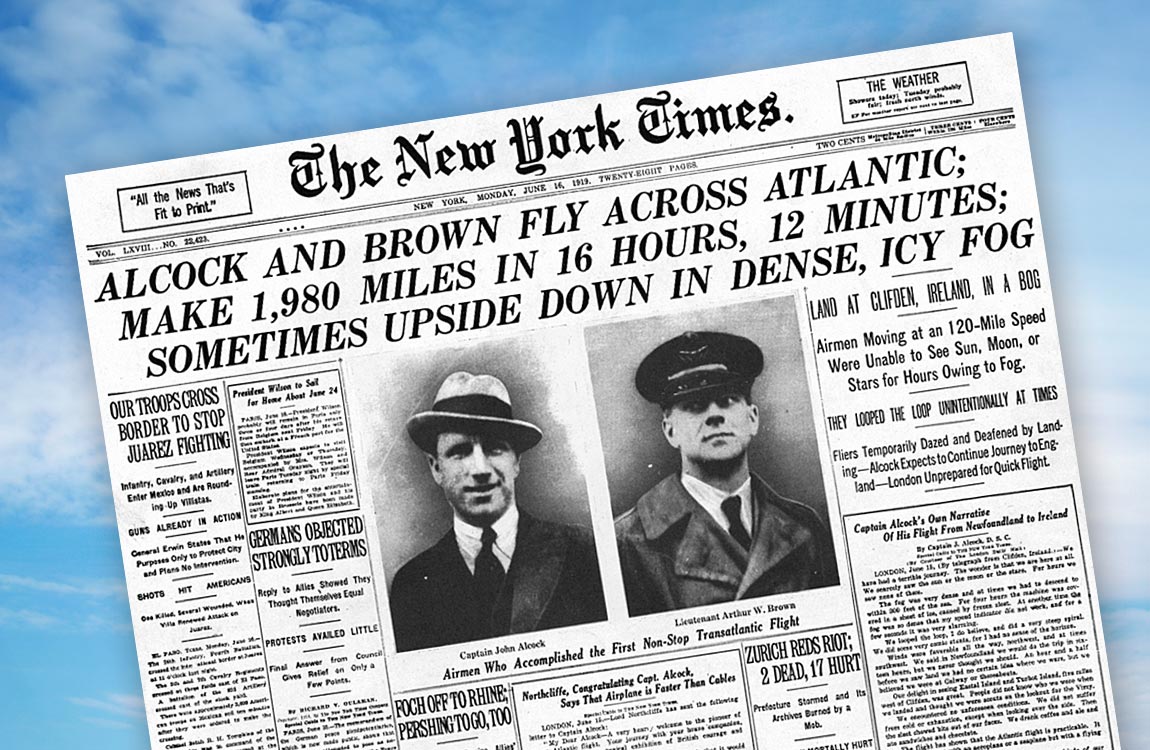
PEACHTREE CITY, USA – On June 14, 1919, British aviators Captain John Alcock and Lieutenant Arthur Whitten Brown made history by completing the world’s first nonstop transatlantic flight.
Flying a modified Vickers Vimy twin-engine bomber, they departed St. John’s, Newfoundland, and landed nearly 16 hours later in Clifden, Ireland, traveling about 1,890 miles.
Flying through dense fog, freezing temperatures, rain, and darkness, Alcock and Brown relied on basic flight instruments and celestial navigation to stay on course. At one point, the aircraft entered a dangerous spin after icing conditions caused the controls to freeze, but Alcock was able to regain control and continue the flight.
Despite landing in a bog that damaged the aircraft, the crew completed their mission successfully and became overnight aviation pioneers.
Although Charles Lindbergh’s 1927 solo flight from New York to Paris is often the most recognized transatlantic achievement, Alcock and Brown proved that long-distance international flight was not only possible but practical.
Their remarkable accomplishment helped usher in a new era of aviation, laying the groundwork for the global air travel and international cargo networks that connect the world today. More than a century later, their pioneering spirit continues to inspire the aviation industry and those dedicated to keeping aircraft flying safely around the globe.